 visit Auburn.edu
 |
Seventh-annual real estate symposium coming Sept. 24 to Auburn University’s Neville Arena
Alternative real estate development isn’t new to experienced professionals, but it is to recent headlines reporting major projects such as data centers, senior living options, technology-boosted healthcare projects, all-encompassing entertain venues, and future high-tech storage facilities using AI and robots.
Auburn University’s Winchester Institute for Real Estate Development will host its annual fall symposium Sept. 24, and after steady growth in attendance from professionals, students, faculty and investors, this year’s event is moving into Neville Arena where the goal is set for at least 400 participants.
However, the institute’s namesake, Greg Winchester, says the invitation is open to anyone who wishes to attend and learn about some of the surprising new developments and options taking place in the real estate industry.
“We’re really enthusiastic about doing this for the first time in Neville Arena, and it’s Homecoming weekend, so if you’re coming to Auburn for the game and here anyway, come on for this,” he said. “We want to fill up the arena as much as we can.”
This year's symposium, The Future of Alternative Real Estate Development and Investments, will examine how rapidly emerging and alternative asset classes are transforming the real estate landscape.
Exploring the hottest trends
The Winchester Institute is jointly supported by Auburn’s Harbert College of Business and the College of Architecture, Design and Construction.
Industry panels at this year’s event will explore:
• Emerging residential property sectors
• Data centers
• Healthcare & life sciences
• Storage & industrial outdoor storage
• Entertainment & sports developments
“When we got the idea for this year’s subject matter, we were in New York on field study last year with our grad students,” Winchester said. “We heard from several of the investment banks and institutes up there, that they were raising a lot of money and getting more involved in alternative real estate.”
Winchester described alternative real estate as property types that people may not necessarily think of at first, rather than the conventional neighborhood shopping centers, large bulk warehouses, roadside hotels, office buildings and apartments.
Real estate accounts for 15 percent of the nation’s GDP, he said, and there is a big variety of commercial real estate, including the five primary topics the symposium will address.
Discussion about residential property will touch on large-scale communities, including age-restricted communities, student housing, build-to-rent residential such as townhouses and condos, rental homes; and senior living, whether independent, senior or skilled-nursing.
“Another big sector is data centers. We’re going to have a data center panel talk about what’s going on with data centers, and we’re going to have data center operators and also construction companies that are building these massive data centers,” Winchester said.
Why has storage real estate jumped?
Storage real estate also has become more interesting, which might be surprising to some in the industry. “There are different categories, such as ministorage, that have really evolved as an industry and have gotten more mature.
“Another one is outdoor storage, kind of a newer one that is kind of emerging and getting more sophisticated, as there is a growing need for outdoor space for anything from construction equipment to, as in the case around Mobile, port-related storage,” he said.
Future high-tech warehouses and those that use artificial intelligence tools and robots will become more prevalent, as will changes in the healthcare and the life science sectors as they are among the fastest growing areas of the economy now, he said.
“Another one that I’m really excited about is experiential real estate,” Winchester said, referring to projects that involve providing a memorable experience for the consumer. “I’m talking about large-scale, mixed-use projects that are anchored by sports teams or entertainment venues, or both. For example, The Battery at the Braves stadium in Atlanta. We will have several of the nation’s most experienced experts touching on this.”
He cited the Dollywood entertainment campus as an example of an established project with historical success, but says that others with new and modern ideas are on the horizon. Another example, he said, is Trilith in Fayetteville, Georgia, which is a major master-planned creative and residential community located adjacent to Trilith Studios. It also sits alongside the new $250 million Arthur M. Blank U.S. Soccer National Training Center, which opened in May 2026 as the permanent headquarters for all 27 U.S. National Teams.
Making informed investments
 |
|
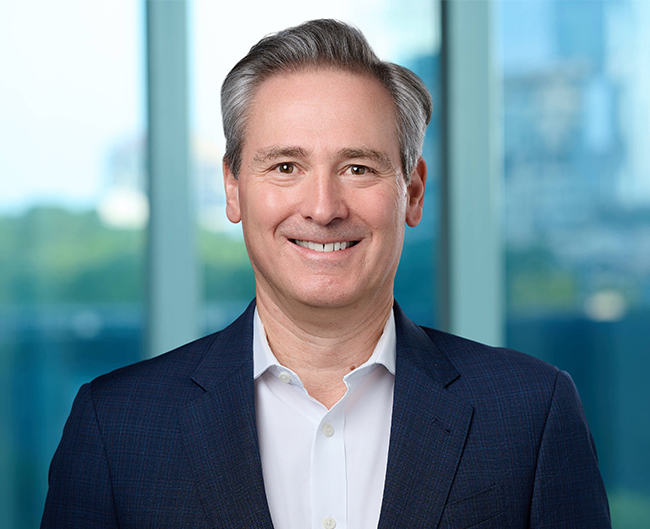
Bill Sexton, CEO of Trimont, is the keynote speaker at The Winchester Institute's fall 2026 symposium |
Bill Sexton, CEO of Trimont, will serve as the event’s keynote speaker. Trimont is one of the industry’s leading commercial real estate loan service providers, handling billions of dollars in investments.
Sexton’s wide range of leadership includes positions in Europe, and since 2018 he has served with Trimont, where as CEO he is based in Atlanta.
“Alternative real estate is not alternative in the sense of being fringe,” he said. “In many cases, these sectors are becoming essential to how communities function and how capital is deployed. Senior housing, student housing, build-to-rent communities, medical office, life sciences, data centers, storage, sports-anchored mixed-use projects and experience-based real estate all respond to very real structural shifts in society and the wider economy.”
From a capital markets perspective, investors are looking for durable demand drivers, scalable operating models and income streams that may behave differently than more traditional property types that in some cases seem challenged by shifting markets, he said.
Technology is another major factor. Data, analytics, artificial intelligence and new operating platforms are changing how real estate is evaluated, financed, serviced and managed.
The next generation of real estate development and investment will be influenced not only by location and physical design, Sexton said, but by the ability to use better information to make better decisions.
###